Safeguarding Himalayan languages, oral traditions, culinary heritage, and cultural practices through structured programming that documents, celebrates, and transmits elder wisdom to future generations.
The Tibetan and Himalayan diaspora faces an urgent cultural crisis. Elders carry entire worlds of knowledge — languages, dialects, oral histories, spiritual practices, medicinal traditions, and culinary heritage — that exist nowhere else. When an elder passes without transmitting this knowledge, it is lost forever.
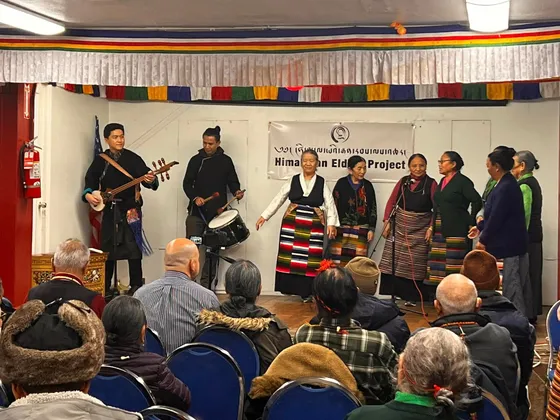
Our Cultural Preservation & Language Program creates structured opportunities for elders to share, teach, and celebrate their heritage — while giving younger generations the chance to learn directly from living repositories of Himalayan culture.
Structured Tibetan language instruction for all levels, preserving endangered dialects and ensuring linguistic continuity across generations in the diaspora.
Facilitated storytelling circles where elders share personal histories, folk tales, and cultural narratives — documenting voices that carry centuries of Himalayan wisdom.
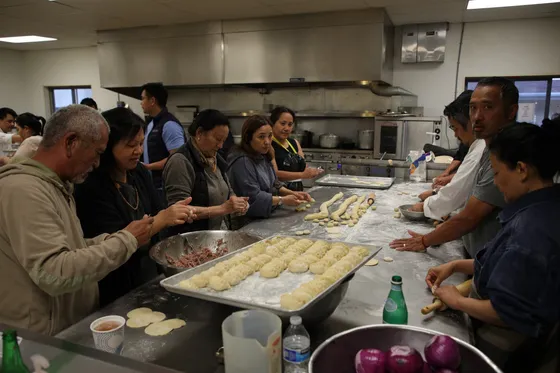
Traditional cooking sessions — from momo-making to butter tea preparation — that preserve culinary practices while fostering intergenerational connection.
Communal prayer, meditation, and observance of traditional festivals and ceremonies that keep Himalayan spiritual traditions alive in the diaspora community.
Through this program, we are building a living library of Himalayan culture — not preserved in a museum, but actively practiced, taught, and celebrated by the community itself.
Our language classes serve as a lifeline for elders who speak dialects rarely heard outside their home regions. Our culinary workshops have become one of our most popular programs, drawing multiple generations together around shared tables and shared traditions.
This is not heritage for heritage's sake — it is a proven strategy for combating elder isolation, building self-worth, and strengthening diaspora identity.
Where Ancient Wisdom Meets Modern Technology
Thousands of years of Himalayan wisdom live in the minds of our elders — in the prayers they recite, the stories they tell, and the scripts they read. But the Tibetan script, spoken by millions, remains almost invisible online. Without modern digital infrastructure, an entire literary and spiritual tradition risks fading from the digital world entirely.
That's why HEP is proud to support Terma Foundry — an open-source studio where cutting-edge technology meets centuries-old tradition. Founded by HEP co-founder Thupten Chakrishar, Terma Foundry is building the digital tools that Tibetan language needs to survive and thrive: OCR technology that converts ancient pecha texts into searchable digital formats, a searchable dictionary with 1.2 million entries drawn from 64 historical sources, the first CSS framework built specifically for Tibetan script, 36 free fonts, and a browser-based word processor with a built-in Tibetan keyboard.
It is the knowledge of our elders — their literacy, their spiritual texts, their living memory of how these scripts were written and read — that guides and informs every tool Terma Foundry creates. The elders provide the wisdom; the technology ensures it reaches the next generation and beyond. Together, HEP's in-person language programs and Terma Foundry's digital tools form a complete bridge between the ancient and the modern — preserving Himalayan culture in both the community hall and the digital world.
Visit Terma Foundry →Your donation directly funds this program. HEP is a 501(c)(3) nonprofit — all contributions are tax-deductible.